
Build the network model first
EVM Networks is easiest to understand when its boundaries are explicit. The EVM is an execution environment for smart-contract logic; multiple networks can be EVM-compatible while keeping completely separate chain state. Gas measures the computational resources used by transactions and contract calls, with fees influenced by network conditions and execution complexity. A label in the interface should never replace the network, address, contract, or transaction evidence that identifies what is actually happening.
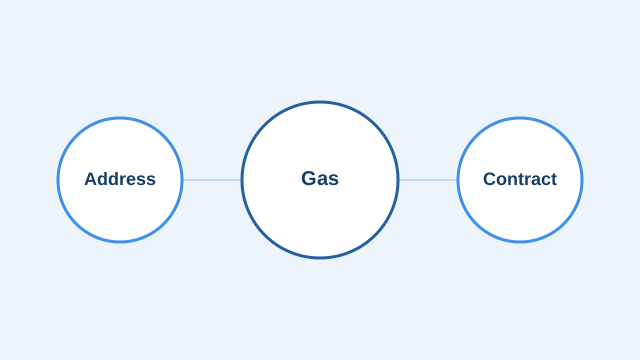
Understand the relationships among EVM, addresses, gas, smart contracts, tokens, and approvals. An approval lets a contract act on tokens within a defined scope, so both the spender and allowance deserve independent review. EVM compatibility describes an execution model, not a single network; chain IDs, native gas assets, contracts, and token approvals still need network-specific checks. If the interface and on-chain evidence disagree, pause the workflow and keep verifiable references such as the transaction hash, network name, or contract address before taking another action.
Put network selection into the transaction flow
In a real EVM Networks workflow, ask three questions in order: what object is involved, what authority is being requested, and where the result should appear. EVM networks often use similar address formats, but the same address does not make assets automatically shared across chains. The EVM is an execution environment for smart-contract logic; multiple networks can be EVM-compatible while keeping completely separate chain state. If one answer is unclear, urgency from a pop-up, countdown, or stranger is not a reason to continue.
Tokens are commonly defined by contracts, and names or symbols can be duplicated, making the contract address an important identifier. For actions that can change blockchain state, review the address, network, asset, amount, or permission scope again at the final confirmation step. Afterward, verify the outcome with transaction history or on-chain data instead of immediately repeating the action.
Understand fees, blocks, and confirmations
On-chain evidence should be used to cross-check what EVM Networks shows in the interface. An approval lets a contract act on tokens within a defined scope, so both the spender and allowance deserve independent review. Gas measures the computational resources used by transactions and contract calls, with fees influenced by network conditions and execution complexity. A trustworthy block explorer can expose transaction status, blocks, addresses, and contract information, while the explorer itself should also be reached from a dependable source.
EVM networks often use similar address formats, but the same address does not make assets automatically shared across chains. This helps distinguish an interface delay from a genuine network, contract, or permission problem. The distinction matters because the correct response to a delayed display is very different from the response to a failed or malicious request.
Avoid common multi-chain assumptions
Risk review around EVM Networks is not only about technical vocabulary; request origin and user pressure matter too. Gas measures the computational resources used by transactions and contract calls, with fees influenced by network conditions and execution complexity. The EVM is an execution environment for smart-contract logic; multiple networks can be EVM-compatible while keeping completely separate chain state. Look-alike domains, fake support, airdrop traps, excessive approvals, clipboard substitution, and shared devices can all turn an ordinary workflow into a dangerous one.
Tokens are commonly defined by contracts, and names or symbols can be duplicated, making the contract address an important identifier. imtoken will never ask for a seed phrase, private key, or verification code. Third-party DApps and smart contracts must be assessed independently, and a wallet connection should never be treated as proof that the third party is safe.
Use on-chain evidence to verify the result
A durable EVM Networks routine is simple: confirm context, review the request, and verify the result. An approval lets a contract act on tokens within a defined scope, so both the spender and allowance deserve independent review. EVM networks often use similar address formats, but the same address does not make assets automatically shared across chains. Connections and permissions that are no longer needed should be reviewed and removed when appropriate.
Tokens are commonly defined by contracts, and names or symbols can be duplicated, making the contract address an important identifier. Blockchain actions generally cannot be reversed unilaterally by a wallet, so checking the address, network, amount, authority, and intended outcome before confirmation is more reliable than trying to recover from a preventable mistake afterward. EVM compatibility describes an execution model, not a single network; chain IDs, native gas assets, contracts, and token approvals still need network-specific checks.
- Confirm that the request really belongs to the EVM Networks context rather than assuming rules from another network or permission model.
- Verify the relevant address, network, asset, amount, or approval scope against the intended outcome.
- Do not provide a seed phrase, private key, recovery phrase, or verification code to another person or website.
- Use a transaction hash, contract address, or block explorer when on-chain verification is needed.
- If the source, domain, or expected result cannot be explained clearly, stop before confirming.